Overview
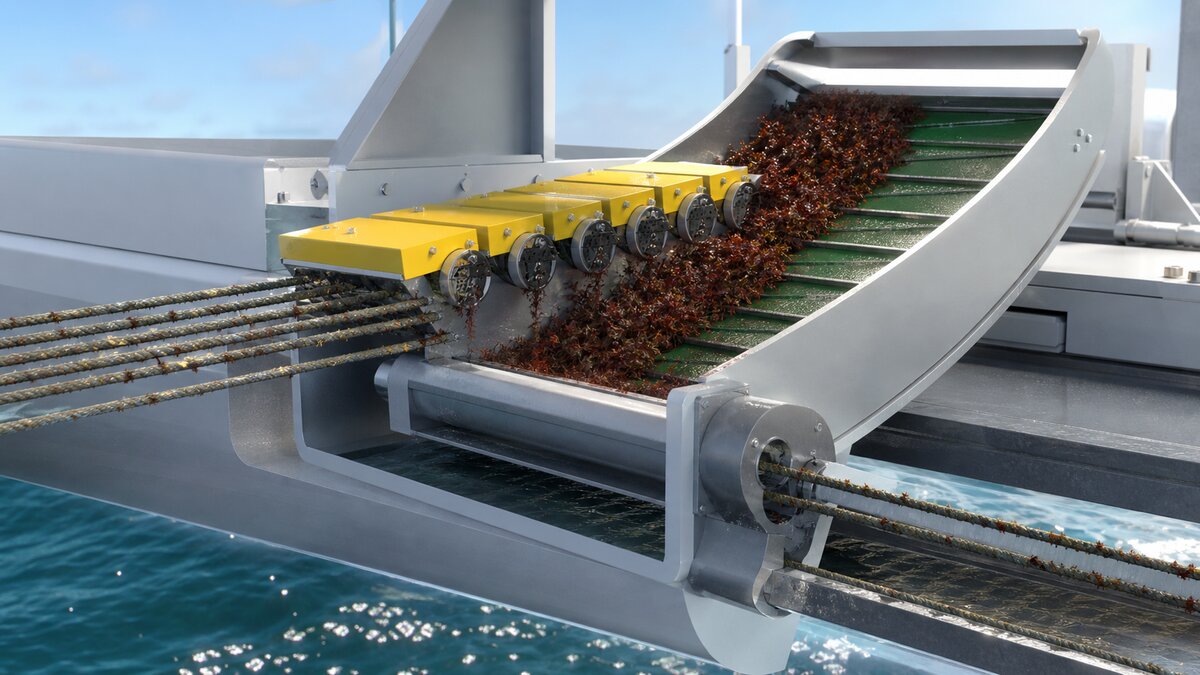
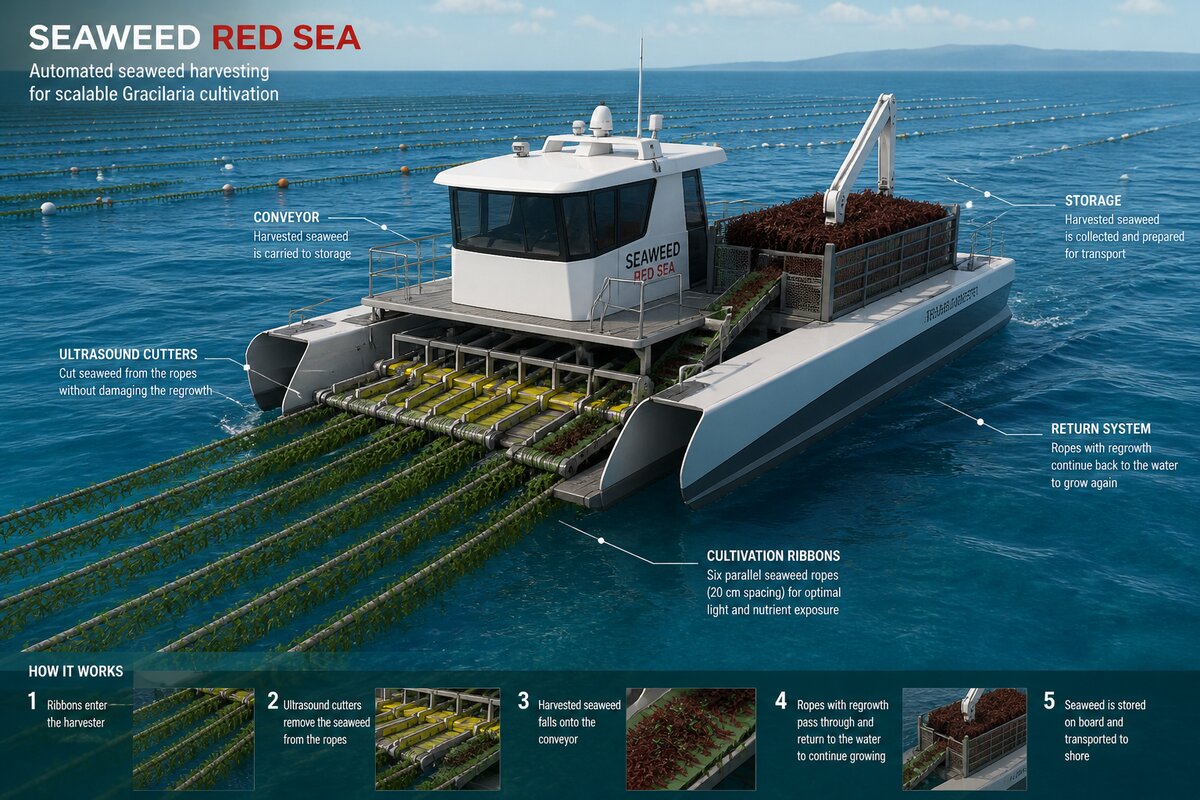
The Red Sea presents a unique arbitrage: industrial demand for seaweed derivatives exists, but cultivation is almost entirely manual. Seaweed / Red Sea Automation is a product exploration into closing that gap — an autonomous catamaran system for offshore seaweed farming.
The project covers market sizing across cosmetics, agriculture, and food production, nutrient analysis of target species (Gracilaria), full 3D system design, and financial projections. Status: concept stage, unbuilt.
Problem
Seaweed farming in the Red Sea is done by hand. Workers raft to long-line installations, harvest biomass manually, and haul it back on small boats. The work is slow, weather-dependent, and never scales beyond family operations.
No local automated system exists for cultivation — only extraction. Industrial buyers import dried seaweed from Asia and East Africa. The gap is structural: labor cost makes scaling impossible, and no hardware product addresses it.
Solution
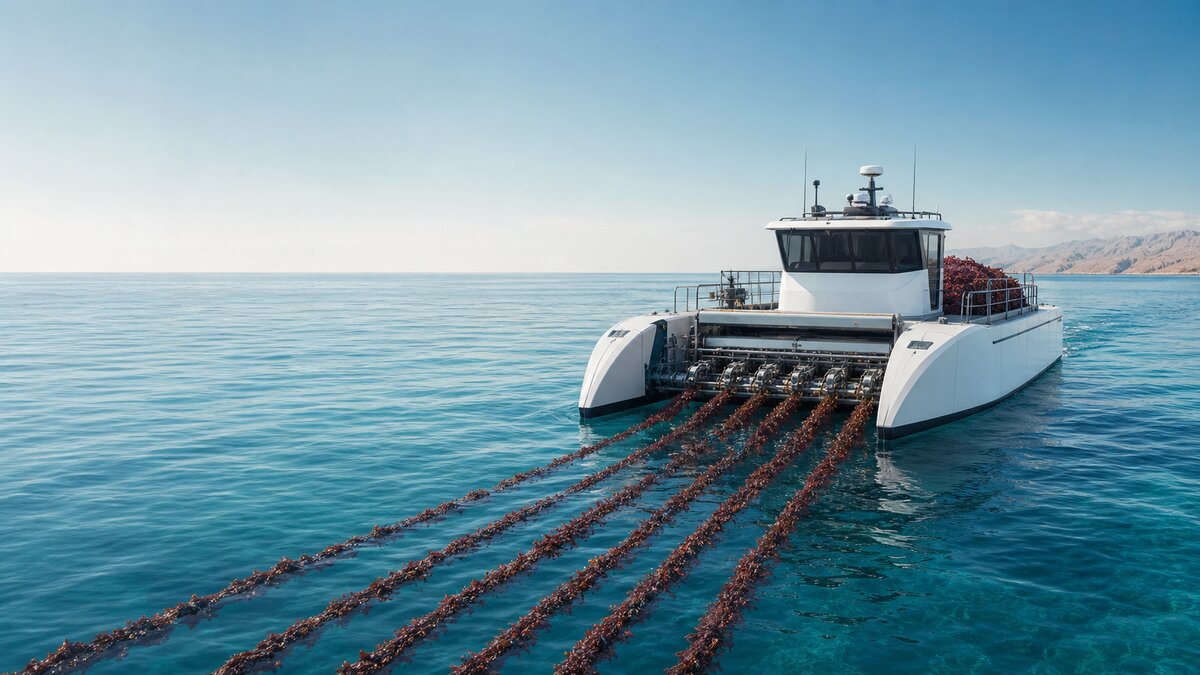
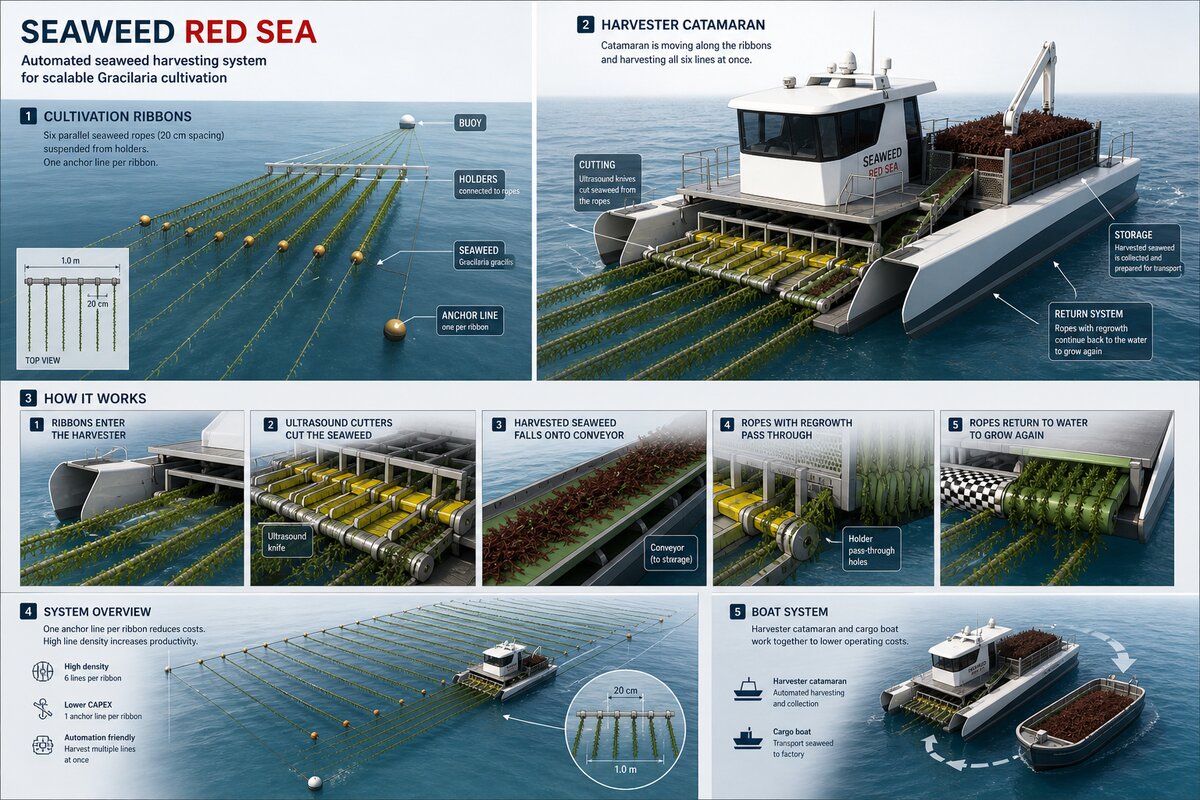
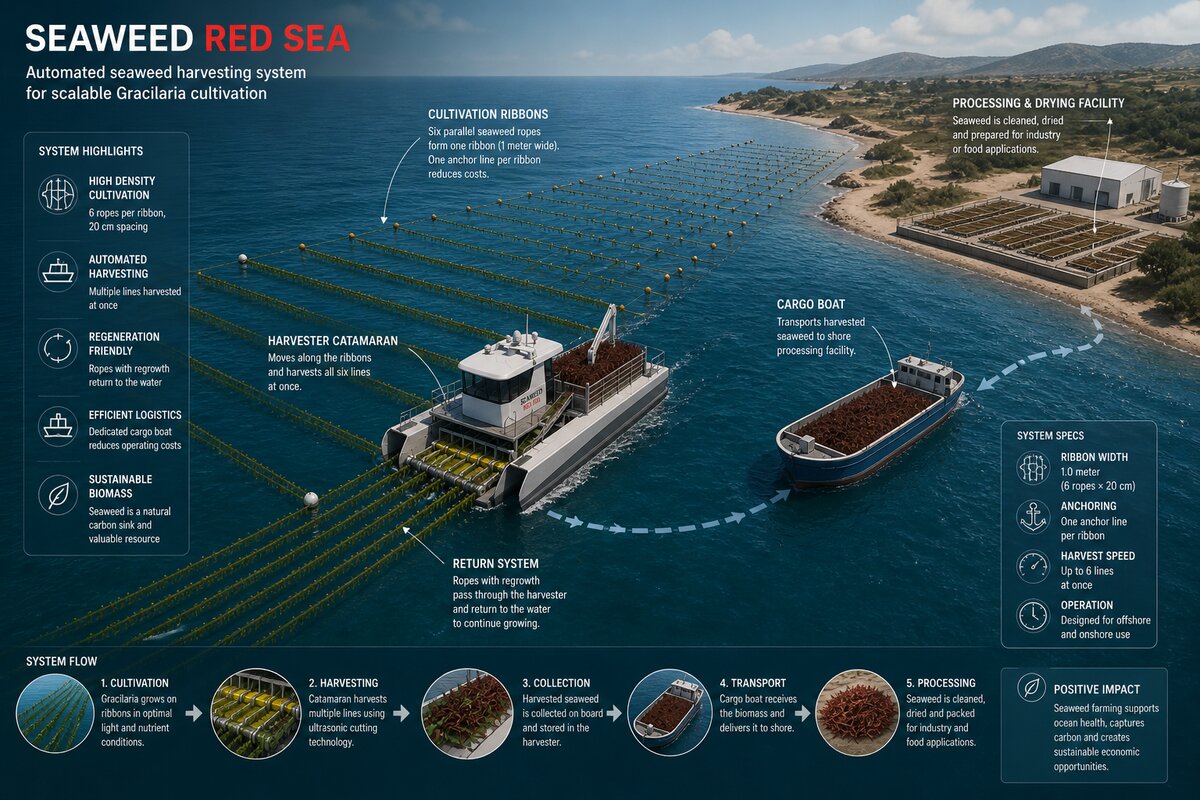
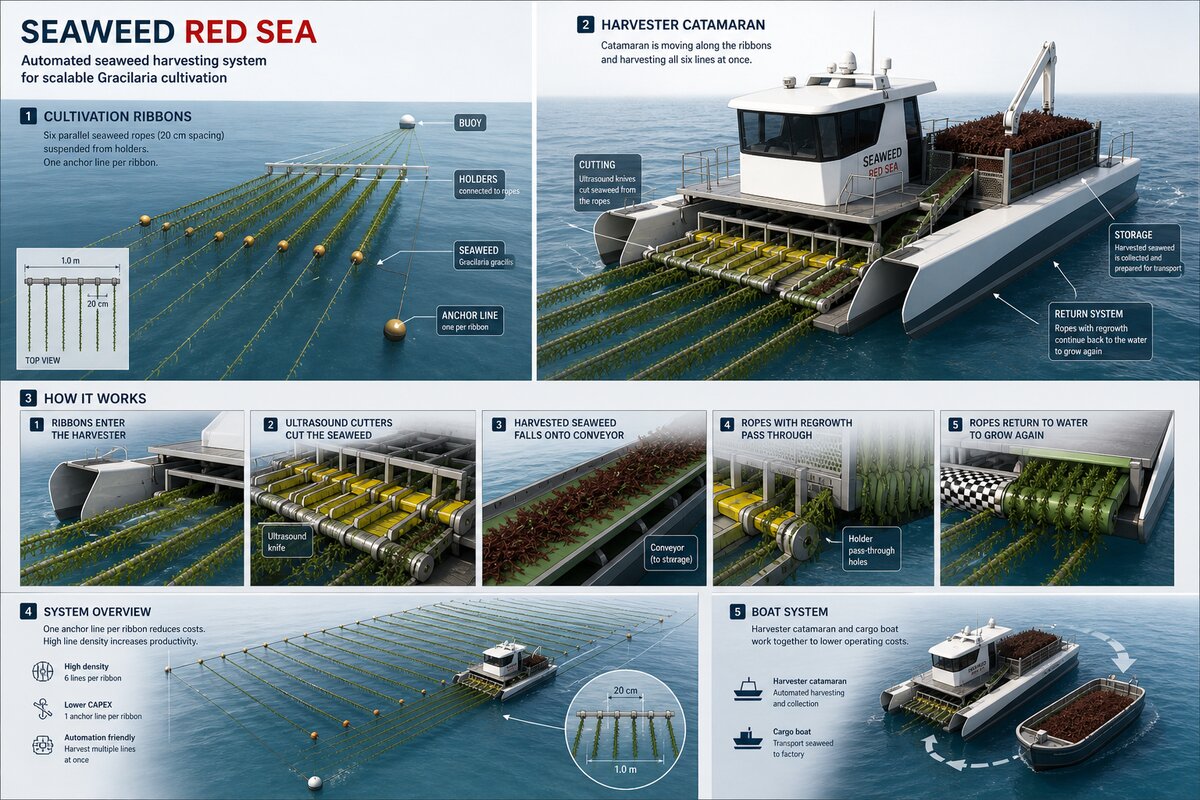
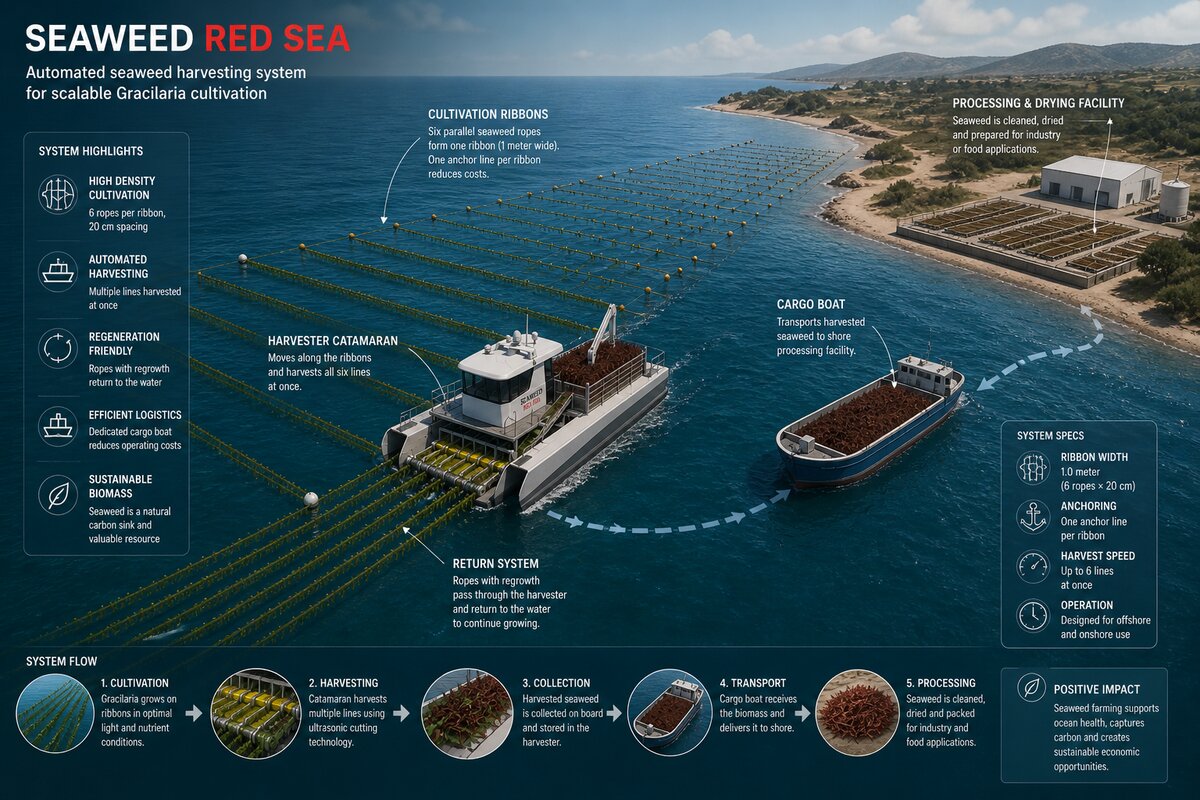
A solar-electric catamaran designed for autonomous operation between long-line seaweed rafts. Key subsystems:
- Navigation: GPS waypoint traversal between raft clusters with collision avoidance
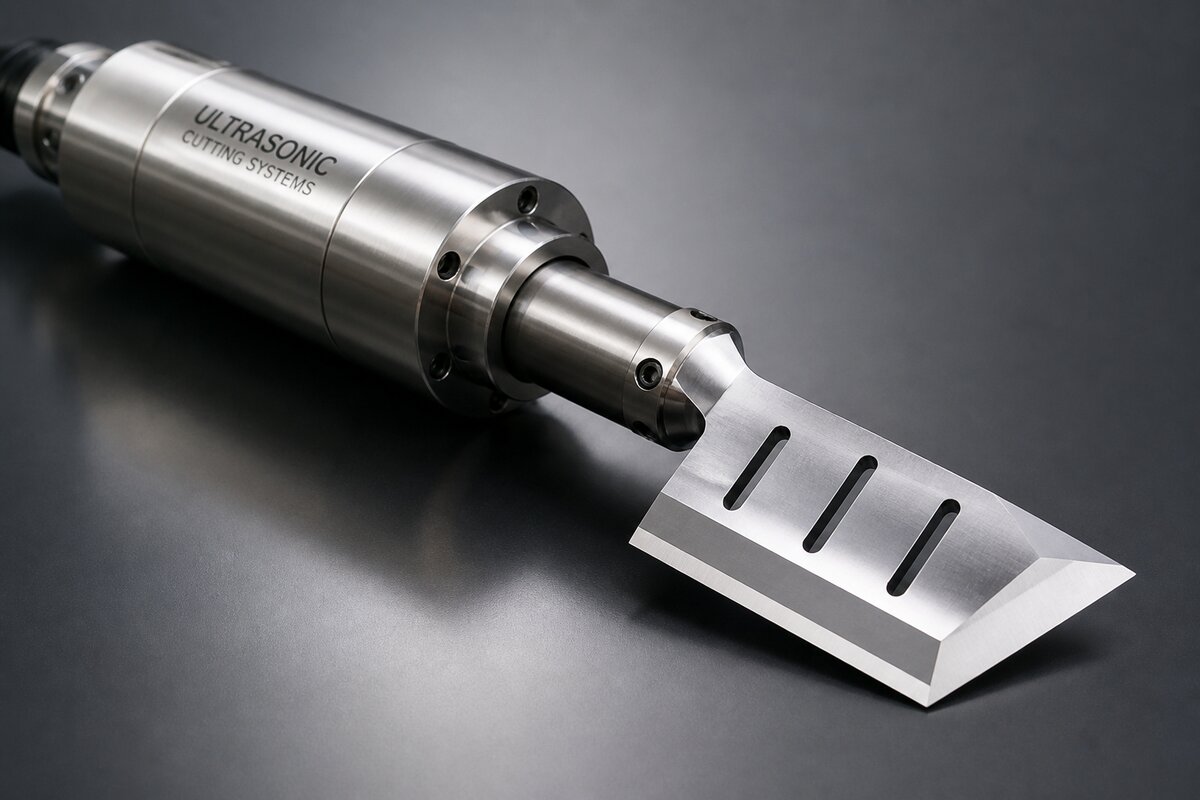
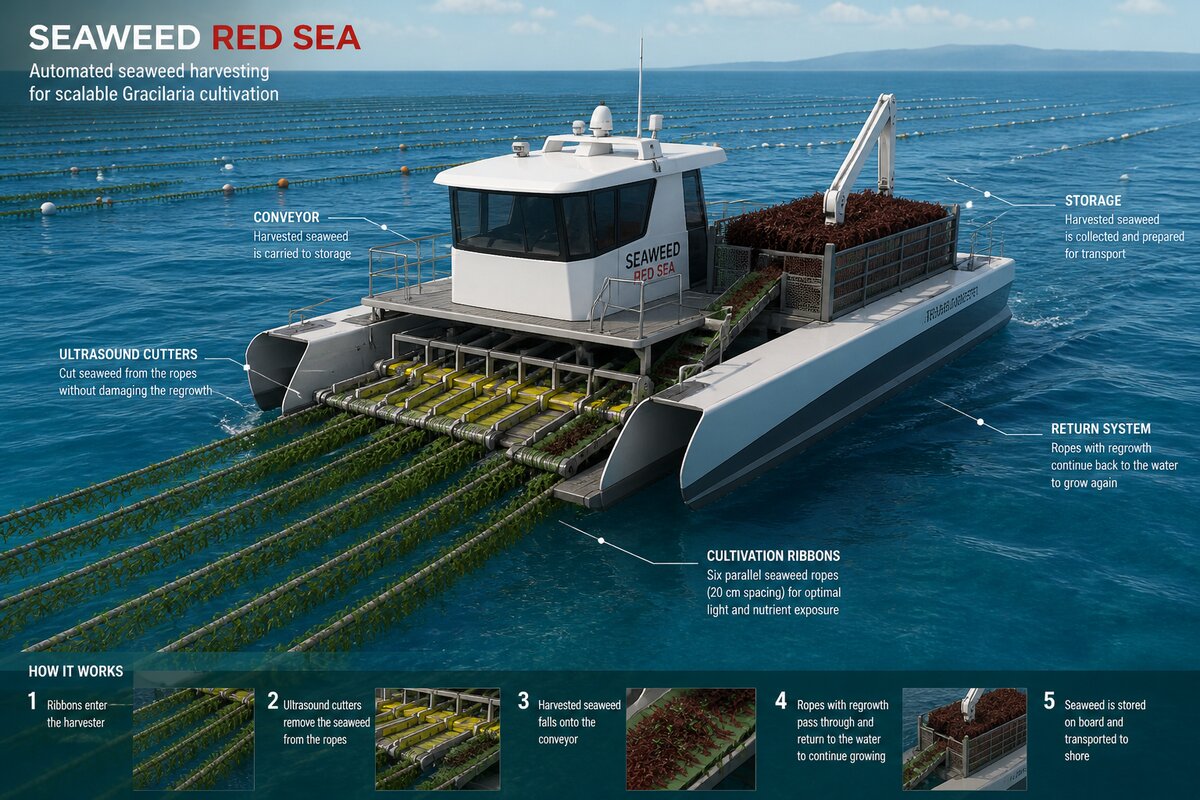
- Harvesting: Ultrasonic knife + conveyor system that cuts biomass and transfers it to internal holds
- Power: Solar array + battery bank, sufficient for daily harvest cycles without refueling
- Modularity: Frame, cutting module, and conveyor are separable assemblies for field repair
The design assumes a 2-person crew for monitoring and maintenance, reducing field labor from 8–12 workers per hectare to 2–3.
Technical Work
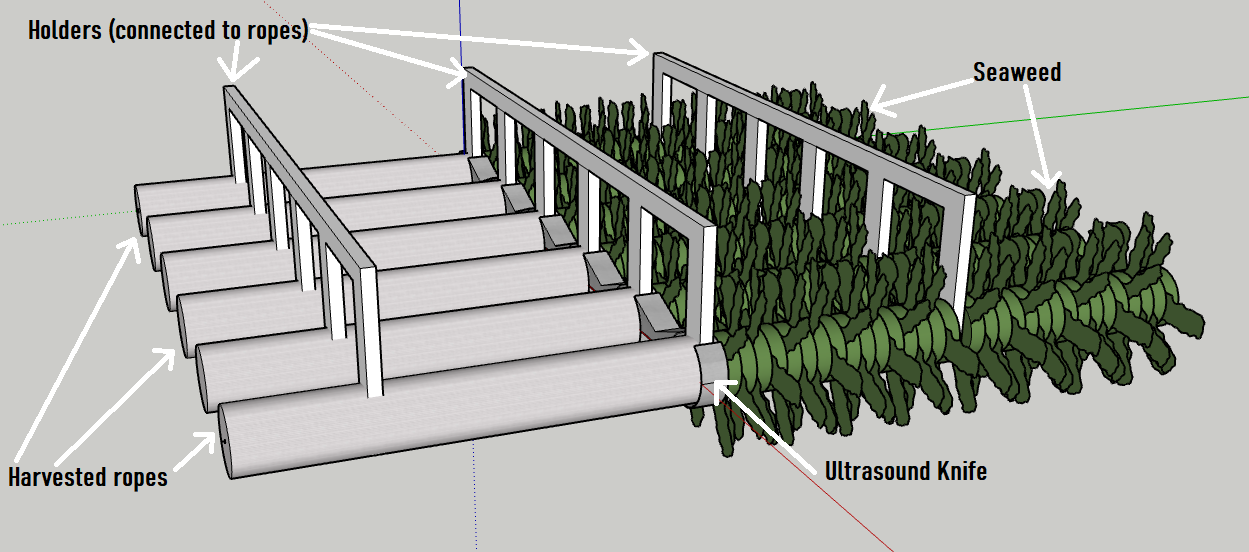
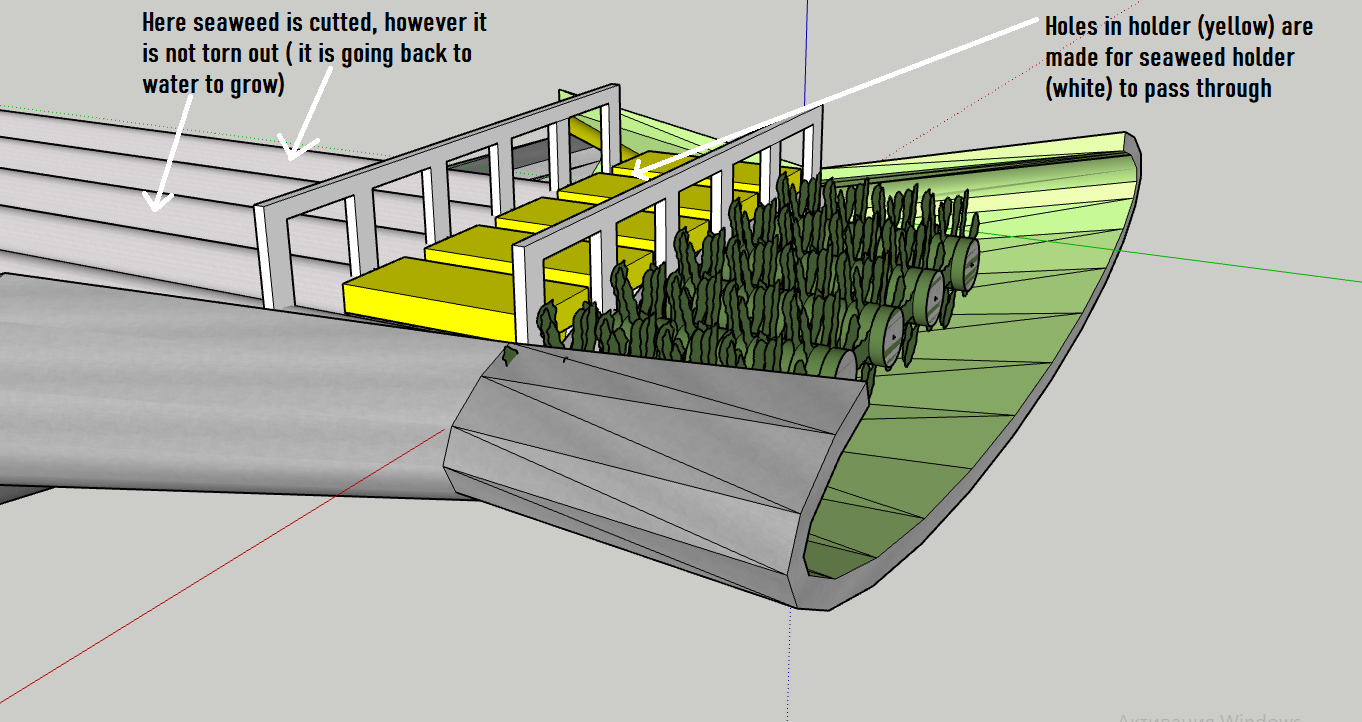
System Modeling: Full SketchUp prototype with component-level detail. Conveyor routing, rope cleverage geometry, knife positioning relative to raft lines, hull stability for 200kg payload.
Nutrient Analysis: Lab analysis of dried Gracilaria to validate market viability and quality benchmarks.
Render Pipeline: Original SketchUp models exported through AI-assisted rendering for investor presentations.
Market Context
Target buyers: cosmetics manufacturers (agar for gels), agricultural suppliers (biofertilizer), and food processors. Current local supply is near-zero — all raw material imported. Regional competitors exist in extraction, but none in automated cultivation hardware.
Financials
Unit economics modeled for a single catamaran covering 5 hectares. CapEx ~€80K per vessel, OpEx ~€15K/year (2 crew, maintenance). At 15 tons dry biomass per hectare and €400/ton market price, gross revenue per vessel per cycle: €30K. Multi-vessel fleets scale non-linearly on maintenance and crew costs.
Full financial model and investor deck available separately. Download PDF or view slide deck online.
Project Status
Concept and research phase. The system is unbuilt, but the stack — market analysis, nutrient data, 3D models, render pipeline, and financials — is sufficient for a build decision or investor pitch.
Investor Deck:
Download: Seaweed_Red_Sea_Concept_Deck.pdf
Render Gallery